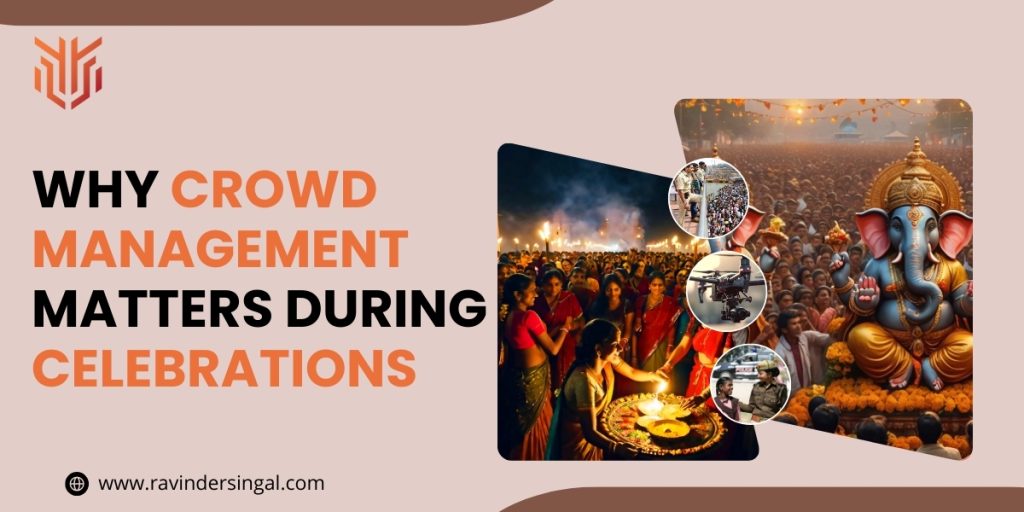


Crowd Management in Public Events: Lessons from the Field

Crowd Management in Public Events – Lessons Drawn from Real Ground Experience
As someone who has spent decades in policing and public safety, I have learned that crowd management in public events is not just an operational requirement – it is a responsibility that directly impacts human lives.
Whether it is a religious gathering, political rally, cultural celebration, or a large-scale public event, crowds represent a powerful combination of emotion, energy, and unpredictability. Managing them safely requires planning, discipline, empathy, situational awareness, and increasingly, technology.
Over the years, I have handled crowds ranging from a few hundred individuals to gatherings exceeding several lakhs. Each experience has reinforced one fundamental truth:
Effective crowd management is about anticipation – not reaction.
It is not just about barricades and manpower – it is about understanding human behavior, predicting movement patterns, and making informed decisions in real time.
This article combines real-world policing experience with modern AI-driven crowd intelligence, offering actionable insights for administrators, event organizers, and security professionals.
Understanding Crowd Psychology in Public Events
Crowds behave very differently from individuals. One of the first lessons in crowd management is recognizing that people in groups act based on perception, emotion, and imitation – not logic.
A minor trigger – real or perceived – can escalate rapidly into panic if not managed properly. In dense environments:
- Panic spreads faster than information
- People follow movement, not instructions
- Emotional triggers override rational thinking
From field experience, I have observed that clear communication, visible authority, and calm guidance significantly reduce chaos.
Successful crowd management begins with one principle:
If you understand how a crowd thinks, you can guide how it moves.
Event Planning Risk Management: The Foundation of Safety
Every safe event begins long before the first attendee arrives.
Event planning risk management forms the backbone of effective crowd control. It includes:
- Venue capacity analysis
- Entry and exit point mapping
- Weather risk assessment
- Crowd demographics study
- Emergency preparedness planning
In real-world policing, we never plan for ideal situations – we plan for worst-case scenarios:
- Stampedes
- Fire outbreaks
- Medical emergencies
- Sudden weather disruptions
A structured risk plan ensures that when uncertainty strikes, response is immediate and coordinated – not delayed and chaotic.
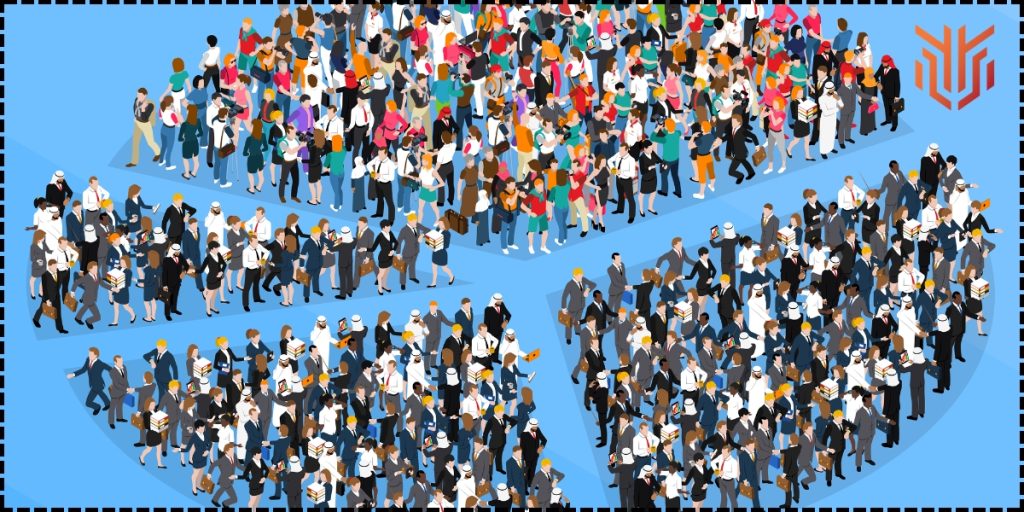
Large Gathering Safety Planning: Managing Scale and Density
As the crowd size increases, complexity multiplies.
One of the most critical risk factors is crowd density. Research and field experience show that:
- Beyond 4 persons per square meter → movement becomes restricted
- Beyond 6–7 persons per square meter → risk of stampede becomes critical
During large-scale events, effective strategies include:
- Staggered entry and exit timing
- One-way movement routes
- Holding zones to regulate flow
- Real-time density monitoring
Managing density is not about control – it is about preventing pressure build-up before it becomes dangerous.
AI-Driven Crowd Management: A Game Changer in Public Safety
Modern crowd management has evolved beyond traditional policing. A powerful example comes from the AI-driven surveillance system deployed during a major mass gathering in Nagpur, where lakhs of people assembled over multiple days.
Key Learnings from AI Implementation
1. Real-Time Footfall Analytics
AI-enabled systems tracked:
- Total crowd movement
- Entry-exit flow patterns
- Peak hours
This allowed authorities to regulate movement proactively instead of reacting to congestion.
2. Crowd Density Monitoring & Stampede Prevention
Advanced computer vision systems:
- Detected crowd density in real time
- Triggered alerts when density exceeded safe limits (7 persons/m²)
- Identified stagnation and collision zones
Result: Early intervention prevented dangerous situations.
3. Intelligent Surveillance & Crime Prevention
AI tools enabled:
- Facial recognition for suspect tracking
- Identification of criminal activity patterns
- Silent and non-intrusive policing
Outcome: Faster detection and improved public safety.
4. Semantic Video Search
One of the most revolutionary features:
- Search footage using descriptions like clothing or behavior
- Quickly locate missing persons
- Track suspects across multiple cameras
What earlier took hours was reduced to minutes.
5. Real-Time Communication Systems
Integration with instant communication platforms enabled:
Immediate alert sharing
Seamless coordination between field teams and control rooms
This ensured faster response and better decision-making.
Event Crowd Control Strategies That Work on the Ground
From years of field experience, the following strategies consistently deliver results:
- Zoned crowd distribution to prevent overcrowding
- Color-coded access passes for controlled entry
- Trained volunteers as human guides
- CCTV and drone monitoring for real-time visibility
- AI-based analytics for predictive decision-making
Technology enhances efficiency – but human judgment remains the core of effective crowd management.
Festival Crowd Management Techniques: Handling Emotional Gatherings
Religious and cultural events are uniquely challenging due to:
- Emotional intensity
- Ritual-driven movement
- Unpredictable peak surges
Unlike ticketed events, crowd prediction becomes complex.
Effective strategies include:
- Route planning with clear directional flow
- Holding areas for crowd regulation
- Controlled release of groups
- Continuous public announcements
In such environments, communication becomes the most powerful crowd control tool.
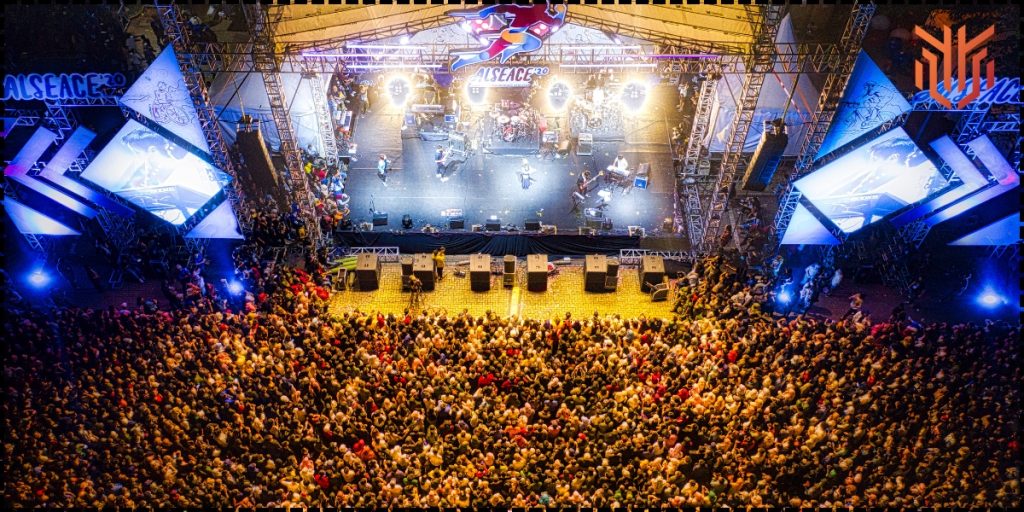
Managing Crowds at Concerts and Entertainment Events
Entertainment events demand a delicate balance between freedom and control.
- Excessive policing → resistance
- Insufficient control → chaos
Best practices include:
- Flexible deployment of security personnel
- Rapid response teams
- Visible but approachable authority presence
The goal is not to restrict – but to guide movement safely without disrupting experience.
Emergency Response for Crowd Events
No matter how well an event is planned, emergencies can occur.
An effective emergency response system must be:
- Fast
- Coordinated
- Pre-rehearsed
Key components:
- Unified command system
- Medical and fire response teams
- Regular mock drills
- Clear evacuation protocols
In crowd management, response time determines outcome.
Crowd Management Best Practices from the Field
Over decades, some principles have consistently proven effective:
- Respect the intelligence of the crowd
- Communicate early and frequently
- Design intuitive movement paths
- Train staff in conflict de-escalation
- Use technology as a force multiplier
These practices transform basic operations into professional crowd management excellence.
Real-Time Insights and Measurable Impact
Data-backed observations show:
- Structured crowd management reduces incidents by over 60%
- AI-based monitoring improves response time by nearly 40%
- Intelligent surveillance enhances crime detection and prevention
In large-scale implementations, technology has also enabled:
- Better manpower optimization
- Improved child safety
- Increased public trust
- Zero major crowd-related incidents in controlled environments
The Role of Leadership in Public Event Safety Management
Leadership is not just about command – it is about presence.
When people see calm, confident leadership on the ground:
- Trust increases
- Panic reduces
- Cooperation improves
Crowd safety is not enforced – it is inspired through leadership.
Conclusion: Reflections from the Field
Crowd management in public events is both a science and an art.
It requires:
- Strategic planning
- Human understanding
- Technological integration
- Continuous learning
Every event teaches a new lesson. Every crowd reminds us of our responsibility.
As a Crowd Management Specialist, my commitment remains clear:
To protect lives, preserve dignity, and ensure that public spaces remain safe for all.
As gatherings grow larger and more complex, the future lies in combining:
Experience + Technology + Empathy
Because when crowds are managed well, communities thrive.
– Dr. Ravinder Singal
Also Read: Tiger Run 2026: Turning Every Step into a Stand Against Drugs – Dr. Ravinder Singal
Frequently Asked Questions (FAQs)
1. Why is crowd management in public events critical?
A: Poor management can lead to panic, injuries, and loss of life, making safety planning essential.
2. What defines a Crowd Management Specialist?
A: Experience, situational awareness, behavioral understanding, and crisis-handling capability.
3. What are the most effective crowd control strategies?
A: Zoning, controlled entry-exit systems, trained personnel, and real-time monitoring.
4. How does risk management help in event planning?
A: It identifies potential hazards and prepares structured responses in advance.
5. Are festival crowd strategies different from concerts?
A: Yes. Festivals require ritual flow management, while concerts need dynamic movement control.
6. What role does AI play in crowd management?
A: AI enables predictive analytics, real-time alerts, surveillance, and faster emergency response.
Follow me on Social Media! Stay Connected & Stay Ahead!
📘 Facebook || 📸 Instagram || 💙 Twitter || 💼 LinkedIn || 📍 Pinterest || ▶️ YouTube
Quitters Don’t Win and Winners Don’t Quit.
Ironman | Deccan Cliffhanger | Comrade Legend Finisher | Motivational Speaker | Writer | Endurance Athlete