

Road Safety Is Everyone’s Responsibility – Not Just the Police
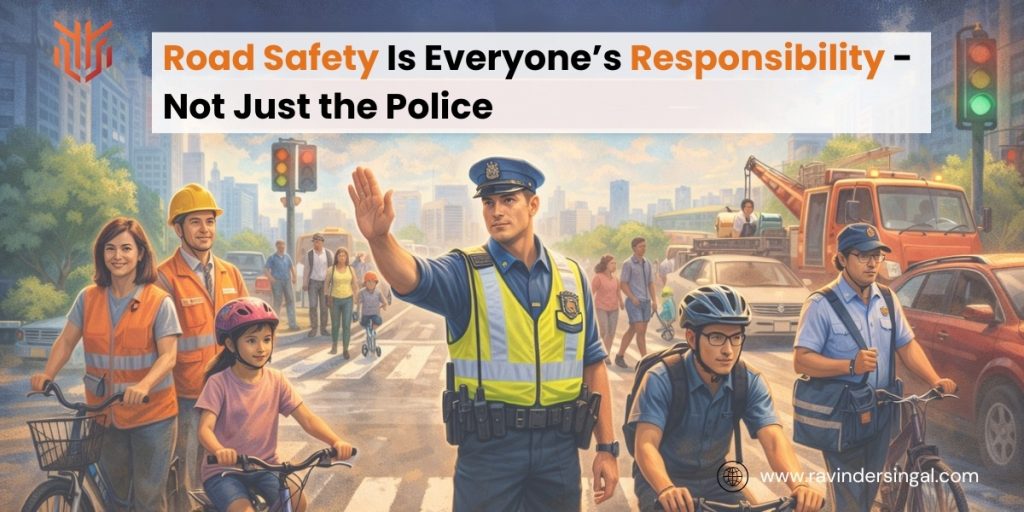
Every time I travel on the roads of India – from bustling city streets to quieter village lanes – I am reminded of a simple but powerful truth: road safety responsibility doesn’t rest with traffic police alone. It is a shared duty that belongs to all of us – drivers, pedestrians, two‑wheeler riders, parents, civil groups, and everyday citizens. To build true road safety awareness, we must look beyond enforcement to active participation, understanding, and accountability. This blog explores why road safety is everyone’s responsibility, and how we can foster road safety for everyone, not just as a slogan but as a lifestyle.
Before we go deeper, let’s look at a stark reality: according to the World Health Organization (WHO), nearly 1.3 million people die worldwide from road traffic crashes each year, with millions more sustaining serious injuries. India alone accounts for a significant share of these statistics, reporting about 150,000 road accident fatalities annually. These are not just numbers. They are mothers, fathers, children, and young lives cut short. This is why road safety responsibility matters, and why each one of us must embrace it every day.
Importance of Road Safety in Today’s Context
The importance of road safety is best understood when we consider how our lives intersect with transportation. Roads are where business meets urgency, travel meets freedom, and daily existence meets unpredictability. Traffic systems are complex; they involve vehicles of every size, speeds that can range from slow to frantic, and human behavior that varies with mood and mindset. In such a dynamic environment, road safety responsibility cannot be delegated to a single entity like the police – it must resonate in every heart.
Accidents don’t discriminate. A momentary lapse in judgment, distracted driving, or a pedestrian crossing inattentively can lead to irreversible consequences. That’s why road safety awareness campaigns are vital for citizens and communities. These campaigns don’t only inform – they transform attitudes.
Why Road Safety Is Everyone’s Responsibility
If you ask me, the core idea behind why road safety is everyone’s responsibility lies in shared ownership. Traffic police can set rules, impose penalties, and guide vehicles at junctions, but they cannot predict every human action. Only we, as citizens, can reflect on our choices behind the wheel or on foot and act responsibly.
Recognizing road safety responsibility means encouraging compliance with traffic rules and regulations, promoting ethical driving behavior, and nurturing a culture where safety is valued over speed, patience is prioritized over haste, and human life is seen as priceless. When every citizen imbues this mindset, roads become safer for all.
Realities of Road Accidents: The Human and Social Cost
The Role of Citizens in Road Safety
One of the most impactful but overlooked elements of community road safety is the role of citizens in road safety itself. Each of us directly influences the road environment through our behavior. For example:
- A driver who stops at a red signal respects not just the law, but other lives.
- A pedestrian who uses a zebra crossing protects themselves and sets an example.
- A parent who teaches their teenager the value of helmet use nurtures safer future drivers.
When citizens take responsibility – beyond expecting police enforcement – we begin to create a culture of mutual respect and caution.
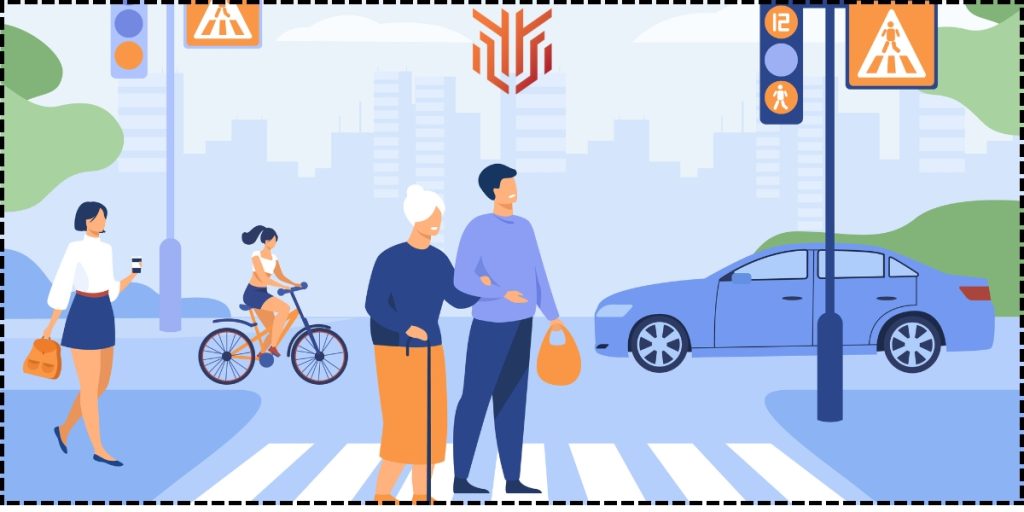
This mindset directly supports pedestrian and driver safety, an essential pillar of road use. Whether you are a pedestrian waiting for a walk signal or a driver navigating through peak‑hour traffic, your decisions matter.
Preventing Road Accidents Through Awareness and Action
Preventing road accidents is not just about knowing the laws. It is about applying them consistently, consciously, and collaboratively. This is where traffic safety tips and safe driving practices come into play. Simple behaviors like:
- Wearing helmets and seatbelts
- Avoiding phone use while driving
- Respecting speed limits
- Being patient at intersections
- Yielding to pedestrians
can drastically lower accident rates. In fact, studies show that wearing helmets can reduce the risk of death by nearly 40% in two‑wheeler crashes and seatbelt use can reduce serious injury by 50% in car crashes. Numbers like these show that safety isn’t idealistic – it’s practical and life‑saving.
Creating a Culture of Safe Driving Practices
Traffic Rules and Regulations: More Than Just Laws
The traffic rules and regulations are designed with safety at their heart. Yet, many of us obey them only when a police officer is nearby or a fine is imminent. True road safety responsibility means internalizing these regulations so they guide our behavior even without external supervision.
For example, speed limits aim to reduce the severity of collisions. Reflective clothing and headlights improve visibility at night. Stop signs prevent intersection crashes. These rules are not arbitrary – they are based on years of research and real‑world accident analysis.
As citizens, understanding this adds purpose to compliance. We begin to see that safe roads are created not through fear of punishment, but through respect for human life.
Road Safety Awareness Begins at Home
A family is the first school for behavior. Instilling road safety awareness in children from a young age builds lifelong habits. Teach them:
- To look both ways before crossing
- To use sidewalks and pedestrian bridges
- To hold hands while walking near busy roads
- To put on seatbelts and helmets without negotiation
These foundational lessons go far beyond mere precaution – they are life lessons wrapped in responsibility and care.
Safe Driving Practices for Drivers and Pedestrians
Road Safety Tips for Drivers and Pedestrians
Both drivers and pedestrians share the road; therefore, road safety for everyone must include guidance for all users. Here are essential traffic safety tips that contribute to safer roads:
For Drivers
- Maintain a safe following distance
- Use indicators for every turn
- Avoid aggressive overtaking
- Never drink and drive
For Pedestrians
- Use crosswalks and footpaths
- Walk facing traffic if no sidewalk exists
- Make eye contact with drivers before crossing
- Avoid distracted walking (e.g., phone use)
These habits might seem small, but when consistently practiced across populations, they reduce conflicts and confusion on roadways – and save lives.
The Role of Citizens in Preventing Accidents
Preventing accidents is a collective mission. Each responsible action adds up. When you allow a merging vehicle space, you reduce tension on the road. When you slow down near schools, you protect children. When you encourage friends and family to adopt safe driving practices, you expand the reach of road safety responsibility.
This collective effort defines what we call community road safety – a commitment that goes beyond personal interest to public well‑being.
How to Improve Road Safety in Your Community
Building Better Roads Begins with Better Citizens
If you wonder how to improve road safety in your community, the answer starts with involvement. You don’t need a badge to lead change. You can:
- Advocate for better signage in your neighborhood
- Organize road safety awareness drives
- Partner with schools to educate children
- Engage local bodies for pedestrian crossings and speed bumps
Communities that take initiative see measurable improvements in safety and a reduction in accidents. This impact is real. In cities where community‑driven road safety programs were implemented, accident‑related injuries dropped by nearly 20% within a year.
These are not statistics – they are tangible outcomes of unified action. When citizens take road safety responsibility, they create safer spaces for children, workers, and commuters alike.
Technology and Innovation in Road Safety
We live in an era where technology can amplify safety efforts. From intelligent traffic systems to dashcams that record driver behavior, innovation is reshaping how we protect road users. GPS alerts, smart crosswalks, and AI‑based speed cameras are examples of progress. Still, technology works best when supported by human intent – our willingness to follow guidelines and respect life.
This reinforces the message that road safety for everyone is both a technological and a human challenge.
Conclusion: A Collective Commitment to Safer Roads
From my experience interacting with citizens, communities, and young people, one thing is clear: road safety is everyone’s responsibility – not just the police. When we understand the importance of road safety, when we adopt safe driving practices, and when we take initiative in our communities, we transform not just roads, but lives.
Each one of us can be a guardian of safety – whether by obeying traffic rules and regulations, motivating others to respect signals, or simply setting examples of patience and prudence. Together, through persistent road safety awareness, consistent action, and mutual respect, we can significantly reduce accidents, protect families, and inspire a new generation that values safety as deeply as freedom.
Let’s not wait for accidents to teach us lessons. Let’s embrace road safety responsibility today – not just as a duty, but as a commitment to humanity. Because safer roads mean thriving communities, stronger futures, and lives lived with dignity.
Also Read: Online Gaming & Teenagers: Hidden Risks Parents Should Understand – Dr. Ravinder Singal
Frequently Asked Questions (FAQs)
1. Why is road safety important for everyone, not just the police?
A: Road safety doesn’t depend solely on enforcement. Every individual’s behavior – driver or pedestrian – affects road outcomes. Collective responsibility reduces accidents and saves lives.
2. What basic traffic safety tips can all citizens follow?
A: Obey signals, maintain safe speeds, wear seatbelts and helmets, avoid distracted driving, and always yield to pedestrians.
3. How can communities improve road safety together?
A: Communities can organize awareness programs, partner with local authorities for infrastructure improvements, and promote road safety education in schools.
4. What role do parents play in road safety awareness?
A: Parents teach early habits – helmet use, safe crossing, and respect for signals – which children carry into adulthood, shaping lifelong responsible behavior.
5. How can pedestrians stay safe on busy roads?
A: Use designated crossings, walk on sidewalks, avoid phone use while walking, and make eye contact with drivers before crossing.
6. Does technology improve road safety?
A: Yes. Innovations like smart signals, dashcams, and speed monitoring can enhance safety – but they work best when users act responsibly.
Follow me on Social Media! Stay Connected & Stay Ahead!
📘 Facebook || 📸 Instagram || 💙 Twitter || 💼 LinkedIn || 📍 Pinterest || ▶️ YouTube
Quitters Don’t Win and Winners Don’t Quit.
Ironman | Deccan Cliffhanger | Comrade Legend Finisher | Motivational Speaker | Writer | Endurance Athlete